Parenting, Emotional Labor, and Why Couples Feel So Disconnected And What to Do About It
Parenting Is Meaningful and Incredibly Demanding
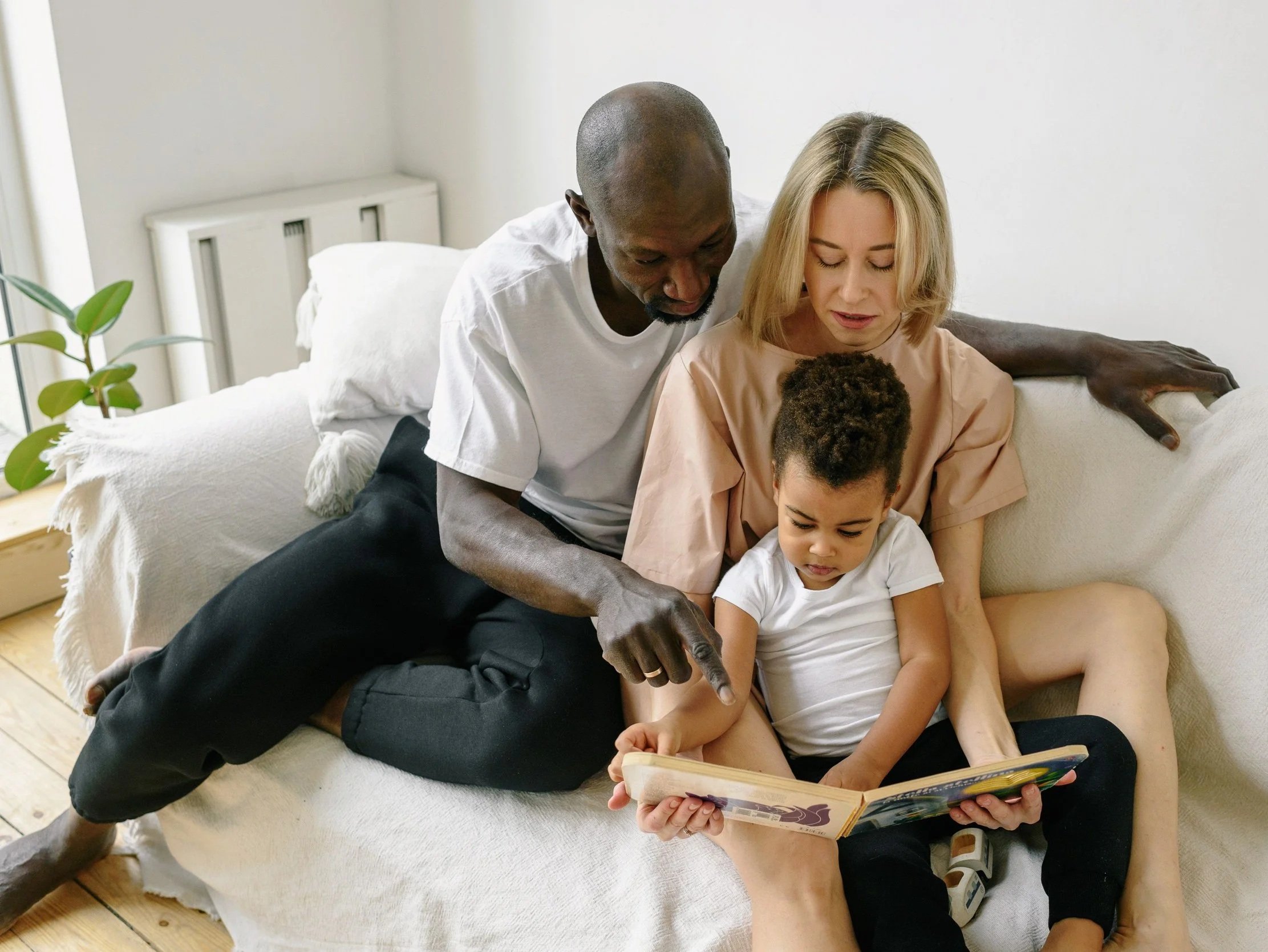
A tender moment of connection amid the invisible labor of parenting and partnership, a common theme in Couples Therapy Massachusetts.
Parenting is a beautiful, meaningful experience. It’s an honor to raise human beings, to shape and support them, and to witness their lives unfold. Parenting is also not for the faint of heart. The responsibility is immense, and the demands can be unending at times.
Many people enter parenthood with a vision of how they want to parent and how they want their family to feel. Sometimes that vision is modeled after the family you grew up in, and other times it’s shaped in direct opposition to it. I’m definitely not going to do it the way my parents did. But what we imagine parenting will look like often shifts once we’re actually living it, especially depending on the needs, temperament, or neurodiversity of the child in front of us.
Often, partners don’t deeply explore their parenting philosophies before having children. There’s a general sense of “We both want kids,” but not always a shared understanding of how those kids will be raised, how stress will be handled, or how responsibilities will be divided. Let’s face it, even if you did have these conversations, you can’t really know what it will be like for the both of you until you are knee deep in the beautiful chaos of parenthood.
When Parenting Changes the Relationship Dynamic
Even couples who are doing well before children can find themselves struggling once a baby arrives and the entire system changes.
Before kids, you may have had more flexibility, more time together, and more emotional energy. After kids, priorities shift quickly. Sleep deprivation sets in. Free time disappears. Stress increases. Parenting doesn’t just add responsibility, it amplifies what’s already there, both the strengths and the challenges in a relationship.
This is something I explore more broadly in my blog, Why Relationships Are So Hard (even in Good Relationships) where I talk about how stress, expectations, and survival strategies impact even strong, loving relationships.
The Roles Couples Fall Into Under Stress
Roles within relationships tend to form organically, especially if you are not intentional, which is for most of us.
If we step back as partners and parents and really look at the roles we fall into, we often notice that some work well and others quietly create tension. I learned a lot about this early in my career when I was co-leading a therapeutic group for adolescent boys.
Running a group isn’t the same as parenting, but it teaches you a great deal about communication, boundaries, and how people unconsciously take on certain roles when stress is present.
I noticed that I often slipped into the role of setting limits. I was highly attuned to when things were going off track. The other therapist had a different tolerance for the chaos and tended to hang back more. The more she sat back, the more I stepped in. And the more I stepped in, the more she leaned into a different role. We were playing off each other without fully realizing it.
How Roles Become Rigid Without Awareness
What we eventually had to do was slow down and reflect together. Was this dynamic helping the group? Was it helping us?
I realized I needed to take a breath and sit back sometimes, which allowed her to step forward and provide structure. Over time, we learned each other’s cues and developed more flexibility in how we showed up.
Parenting works much the same way, except it’s not ninety minutes. It’s 24/7.
The nugget of wisdom here is how essential it is to create intentional touch points to talk about what’s working and what isn’t. Without those conversations, roles can become rigid, resentment can quietly build, and couples can feel stuck in patterns they never consciously chose.
This is the kind of work I help couples do in therapy: slowing things down, becoming aware of how they play off each other, and learning how to shift roles thoughtfully and collaboratively, so they can feel more like teammates again, rather than opponents or strangers passing each other in the day-to-day.Without intentional reflection, partners can get locked into rigid roles: the disciplinarian, the organizer, the emotional regulator, the fun parent, or the one who withdraws. Over time, this can lead to frustration, resentment, or feeling unseen.
The work becomes creating space to ask: Are we okay with the roles we’re playing? How is this working for us? What needs to shift?
The Invisible Work: Emotional Labor and Mental Load
And then there’s emotional labor.
Emotional labor, like mental load, is invisible. It’s not something you can see unless it’s named. During times of stress, couples often don’t communicate what they’re carrying internally. Instead, it leaks out sideways through irritability, passive-aggressiveness, snapping, or feeling chronically frustrated.
Sometimes it sounds like, I’m doing everything, but I can’t let go of anything because you won’t do it right. That push–pull is exhausting and deeply familiar for many couples.
Why Emotional Labor Often Goes Unspoken
In my work with couples, we often focus on making the invisible visible. That means talking openly about what you’re carrying, not as an accusation, but as an honest reflection: These are all the things I’m holding, and it feels heavy.
Sometimes a partner is aware of that load but doesn’t know how to help. Other times, they have very little awareness at all. And often, both partners are carrying invisible loads, each assuming theirs is the heaviest because it’s the one they’re holding.
How someone shows up in a relationship is often a reflection of how much they’re carrying beneath the surface.
This connects closely to what I explore in my blog, Why Stress Steals Connection in Relationships, where I explain how chronic stress reduces emotional availability and fuels disconnection between partners.
Becoming Curious About What You’re Carrying
One thing I help couples with is becoming curious about why they’re carrying what they’re carrying.
What is actually yours to hold?
And what might not be yours?
Are you carrying other people’s emotions? Worrying about how someone might react if you don’t do something? Feeling overly responsible for keeping things running smoothly or keeping everyone else okay?
We explore where this comes from. Has this always been true for you? Is it new? Is it familiar from other parts of your life? How did you learn to carry this load?
Often, these patterns make sense when we look at family-of-origin dynamics. Our families were usually doing the best they could with the tools they had, and we picked up subtle lessons about responsibility, caretaking, and emotional survival along the way.
What’s Yours to Carry and What Can Be Shared
The beauty of this work is learning what is yours to carry, what isn’t, and what might be shared.
And just as important, learning how to talk about it in ways that are productive rather than reactive. That is a skill, and it takes practice.
When emotional labor stays invisible, couples often drift into parallel lives. When it’s named with curiosity and care, it opens the door to understanding, support, and a renewed sense of teamwork.
And What to Do About It
Most people enter relationships because they don’t want to feel emotionally alone in the world.
Parenting and stress can unintentionally pull partners apart, but with awareness, communication, and support, couples can find their way back to each other, not by doing more, but by understanding more deeply what’s really being carried.
This is the heart of the work I do in Couples Therapy Massachusetts: helping partners slow down, understand their patterns, and reconnect as a team — even in the midst of full, demanding lives.

I am a trauma-informed individual and couples therapist trained in family systems-based couples therapy. I pull from a variety of frameworks, including Narrative Therapy, ACT, and Imago, just to name a few. My approach is authentic, down to earth, and infused with humor. My work with couples is rooted in the belief that relationships are both incredible and super hard, and that we’re not meant to navigate them alone.
I help couples develop empathy for themselves and each other while exploring how their personal histories and patterns shape the dynamics they bring into the relationship. Together, we create space for insight, healing, and growth so partners can learn new ways of engaging with one another, ones that reflect how they truly want to show up in their relationship.
Specialties: Couples Therapy, Individual Therapy for Anxiety, Burnout and Relationship Support.
