Why Relationships Are So Hard (even in Good Relationships)
Couples Therapy Massachusetts
Being Human Isn’t Easy
Being human isn’t easy.
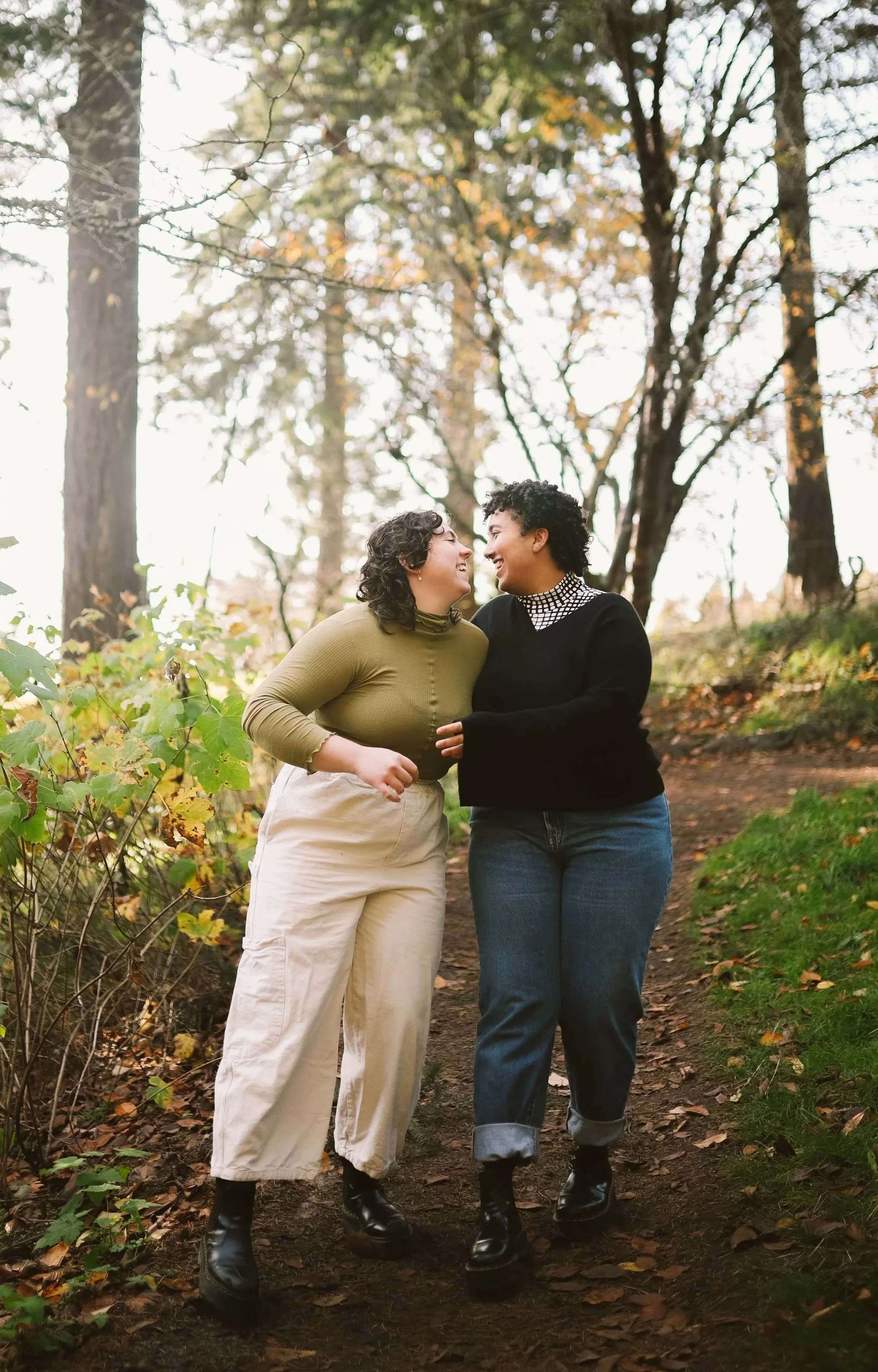
Even good relationships can feel hard. Sometimes connection is built by slowing down, walking side by side, and making space for each other, a core focus of Couples Therapy Massachusetts.
I mean, you’ve lived how many years now? Even the act of being born, of coming into this world, is not for the faint of heart. From the very beginning, being human asks something of us.
Part of being human is being in relationship: with yourself, with other people, and with the environment around you. That includes relationships with family, partners, children, friends, coworkers, animals, and even the places you move through each day. And relationships, in all of these forms, are complicated.
The only person you truly have control over is yourself and even that can feel questionable at times. Because if we’re honest, having a grounded, compassionate relationship with yourself isn’t always easy either. There are moments when your own thoughts, reactions, and emotions feel confusing or overwhelming, despite your best efforts.
So I’m not here to be a downer, but I am here to say that of course relationships are hard.
Even when there is love. Even when there is care. Even when both people genuinely want the best for each other.
Every relationship brings together two whole humans, each carrying their own lived experiences, histories, values, passions, wounds, accomplishments, and hopes. You bring your stuff. And the people you love bring theirs, too.
Sometimes those pieces fit together beautifully, like a puzzle snapping into place. And other times it can feel like you’re trying to force together pieces from entirely different puzzles, mismatched, frustrating, and impossible to make sense of.
And yet… relationships also hold incredible beauty.
They offer connection, meaning, growth, and the possibility of being deeply known. They challenge us, stretch us, and sometimes break us open in ways that matter.
This is where we begin.
In my work at Couples Therapy Massachusetts, I see how often loving, well‑intentioned partners struggle not because they are doing something wrong, but because relationships are happening inside real, demanding lives.
There Is Beauty in the Mess
There is beauty in the mess. There is beauty in vulnerability. And part of being in a healthy relationship is feeling safe enough to access that vulnerability.
The tricky part is that many of us don’t even realize how guarded we are. We’re living our lives, moving quickly, managing responsibilities, often on autopilot. We may not notice how activated we are, or how often we’re operating from our survival strategies.
As we move through the world, most of us carry some form of armor. For some people it’s heavier than others, but it’s there for a reason. That armor helped us survive. It protected us. And while it may be necessary in certain spaces, it can quietly get in the way of connection in our closest relationships.
Strengthening a relationship often means learning how to gently set that armor down. It means allowing yourself to be seen, not just in your competence or strength, but in your fears, longings, and uncertainties. And that kind of vulnerability can only happen when there is emotional safety.
This is a big part of the work I do with couples through Couples Therapy Massachusetts. Many couples come in with their armor on and their swords drawn, guns blazing, ready to defend or protect. The work isn’t about deciding who’s right or wrong. It’s about slowing everything down enough to understand what’s underneath those reactions.
Often, I’ll ask something like, “If you were speaking from a place of vulnerability instead of your survival strategy, what would you be saying right now?”
And sometimes there’s a long pause.
But when a partner is able to access that vulnerability and share it, something powerful happens. I often see the other partner respond with genuine surprise: “Oh my gosh… I had no idea that’s what was happening for you.”
Because up until that moment, they were only seeing the surface , the defensiveness, the withdrawal, the anger. They couldn’t see the fear, the hurt, or the longing underneath.
This is where connection begins.
When You Have a Shit Ton on Your Plate
When you have a shit ton on your plate, it makes complete sense that relationships feel hard.
Most people are pulled in every direction. In our society, the reality is that most families need two incomes just to get by, to pay for groceries, housing, heat, electricity, kids’ clothes, childcare, and everything else that adds up quickly. Even for families who aren’t financially stretched, the pace and expectations of modern life are still intense.
So you’ve often got two full-time working adults. And if you have children, not everyone does, but many do, that adds an entirely different layer of responsibility. Caring for kids’ physical needs, emotional needs, school demands, activities, and transportation. You’re driving here, there, and everywhere, sometimes feeling like a chicken with your head cut off.
And then there’s dinner. Who’s showered? Homework. Bedtime. Maybe a load of laundry you forgot about. Wash, rinse, repeat.
At least that’s how it feels for me at times, actually, pretty often. There are amazing moments in the day, and also moments where it feels like, Wow, I’m just keeping my head above water. And then you wake up and do it all over again the next day.
When you’re living inside that reality, relationships don’t feel simple.
One of the most common questions couples bring into my office is some version of: “Where do we even make space?”
Not just space for hard conversations, but space for connection at all. How do you slow down enough to talk, let alone talk about the emotional stuff, when there’s so much that needs tending?
The Weight of Modern Life and Family Demands
For many couples, there’s even more layered in. A lot of people are part of the “sandwich generation”, caring for their children while also supporting aging parents. They’re working full time, parenting, and increasingly stepping into caregiving roles for their own parents.
And many families no longer live close to extended support systems. It’s not a three-decker where grandparents are upstairs or family dinners happen naturally because everyone is under one roof. Instead, loved ones are often an hour away… or a plane ride away. Help requires planning, travel, and logistics.
All of this matters.
It makes complete sense that being in relationship isn’t easy, especially with the sheer number of demands placed on people today.
Relationships Today Are Asking More Than Ever Before
It’s also worth naming something that often gets overlooked: relationships today are fundamentally different than they used to be.
People are living longer, into their 80s and 90s. Expectations inside relationships have expanded dramatically. Historically, many marriages were rooted in economics or survival. Love, emotional intimacy, and personal fulfillment were not always the goal and many people, especially women and marginalized groups, had limited voice or choice.
Today, we expect our partners to be everything.
Our best friend.
Our emotional support.
Our co-parent.
Our lover.
Our safe place.
Our teammate.
Our provider.
Our cheerleader.
Someone who listens well, communicates clearly, shows empathy, grows emotionally, and somehow still has energy at the end of the day.
That is… a tall order.
An impossible one, really, if we don’t talk honestly about what we’re asking of ourselves and each other.
Making Sense of the Struggle
None of this means relationships are doomed. And it doesn’t mean you’re doing something wrong if it feels hard. It means you’re human, living inside a complex world, trying to love another human while carrying a lot.
When couples can step back and see the context: the stress, the expectations, the history, the pace, something often softens. The struggle stops feeling like a personal failure and starts making sense.
And that’s where meaningful work in relationships can begin.
At Couples Therapy Massachusetts, I help couples slow things down, understand what’s underneath their reactions, and create more emotional safety so vulnerability can show up without fear. Relationships don’t become easier because life gets simpler. They become stronger when partners learn how to navigate complexity together.
You’re Not Doing It Wrong
If relationships feel hard, it doesn’t mean you’ve chosen the wrong partner or that something is broken beyond repair. More often, it means you’re asking real humans to stay connected inside a demanding world.
There is beauty in the mess. There is meaning in the struggle. And with curiosity, compassion, and support, there is often a way forward, even when it doesn’t feel clear yet.

I am a trauma-informed individual and couples therapist trained in family systems-based couples therapy. I pull from a variety of frameworks, including Narrative Therapy, ACT, and Imago, just to name a few. My approach is authentic, down to earth, and infused with humor. My work with couples is rooted in the belief that relationships are both incredible and super hard, and that we’re not meant to navigate them alone.
I help couples develop empathy for themselves and each other while exploring how their personal histories and patterns shape the dynamics they bring into the relationship. Together, we create space for insight, healing, and growth so partners can learn new ways of engaging with one another, ones that reflect how they truly want to show up in their relationship.
Specialties: Couples Therapy, Individual Therapy for Anxiety, Burnout and Relationship Support.
