How Family-of-Origin Patterns Show Up in Your Relationship And What to Do About It
We All Come From a Family Culture
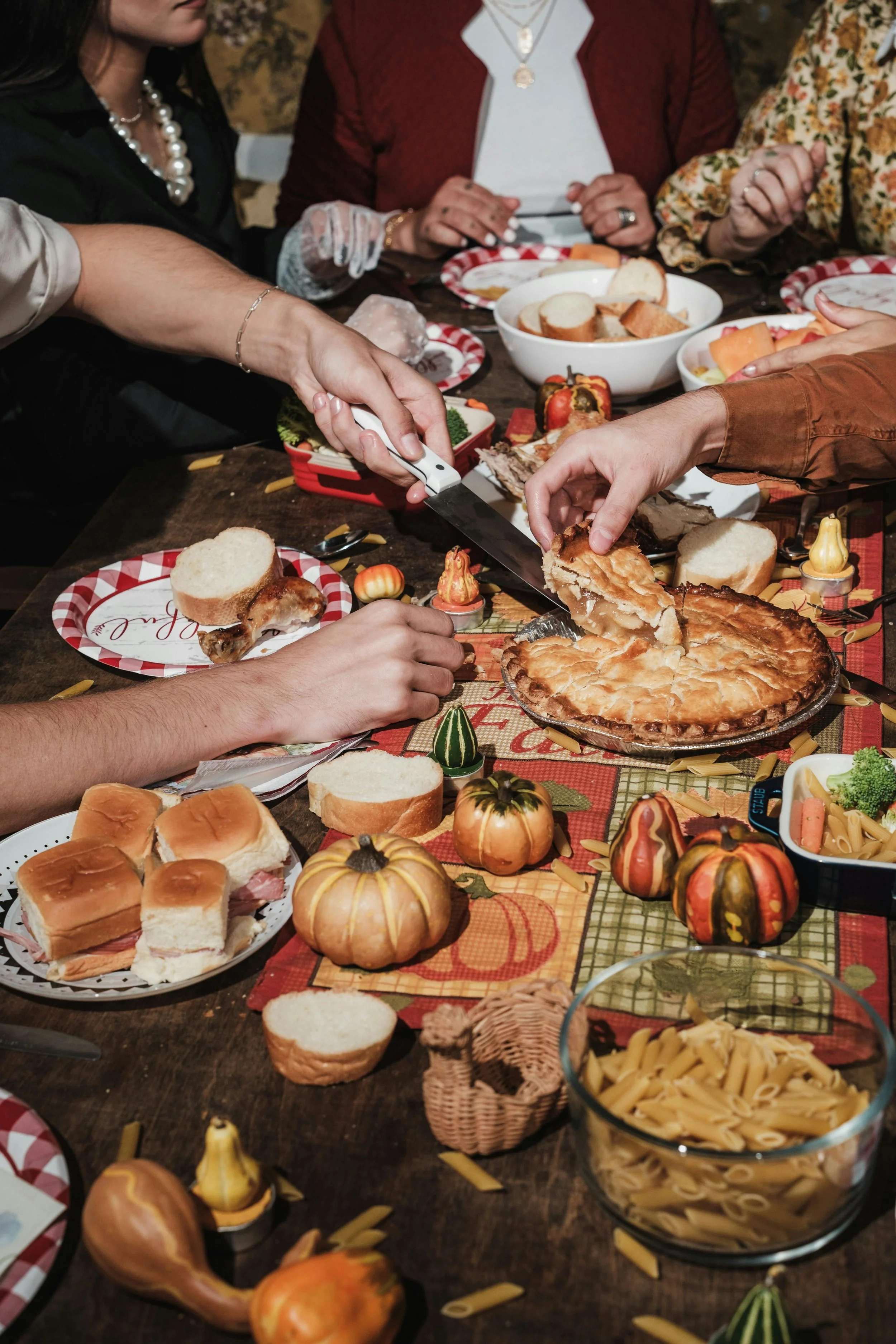
Around every table lives a family story — the laughter, the traditions, and the unspoken roles we carry into adulthood. At Couples Therapy Massachusetts, we help partners understand how these early patterns shape their relationship so connection can grow across generations.
One of the things that unites all of us as humans is that we all come from families. We grow up inside these small worlds, and every family has its own way of being, its own culture, rituals, and unspoken rules.
In my 20+ years working with individuals and couples, I’ve seen how deeply these early family cultures shape the way we love and the way we struggle in relationships. Patterns that felt familiar and at times comfortable at age eight can quietly follow us into our thirties, forties, and beyond.
In some families, people sit down to dinner every night and everyone has a designated seat. You just know, that’s Dad’s chair. If a friend comes over, you suddenly have to explain the culture: “Oh no, that’s where my dad sits. You can sit here instead.” These are simple examples, but they show how patterned family life can be.
There were also rules that were anything but quiet. In my family, us kids weren’t allowed to snack in the living room and watch t.v., but of course we did, at least until we saw our mom’s car pull into the driveway. Then it was a mad dash back to the kitchen. We knew the rule, and we definitely knew we didn’t want to get in trouble.
Beyond behaviors like where we eat, every family develops roles. Unless a family is particularly reflective, most people don’t stop to think, What role did I play growing up?
As I often tell clients, we all learn how to be in relationship from our first teachers, our families.
Were feelings talked about?
Or were big emotions present but never named?
Was affection spoken aloud or simply assumed?
We absorb these relational patterns over time. As children we figure out, often without realizing it, how am I supposed to be here?
I explore the bigger picture of why relationships feel so hard — even when there is love and good intention — in my post “Why Modern Relationships Feel So Challenging — And What to Do About It.”
The Roles We Learn Without Realizing It
Are we the quiet observer?
The peacemaker?
The one who smooths things over when someone is upset?
We grow up in this the way we breathe air. Then we start dating, trying on new relationships. What I’ve witnessed again and again over two decades of clinical work is that we unknowingly bring those same patterns into adult partnerships.
A lighthearted example from my own life: I grew up camping. Every summer there was the tarp fight. My parents would argue about how to set it up, and as a kid I’d think, Here we go again.
Years later I’m camping with my own family, setting up the tarp, and suddenly, holy crap, I’m reenacting this.
These are the “aha” moments I’ve helped hundreds of couples recognize: I see the pattern… now what do I do differently?
How These Patterns Show Up in Conflict
The way we show up in conflict, or avoid it, often mirrors what we learned long ago.
Imagine someone who grew up in a home where conflict felt unsafe. They learned that having a voice could make them a target. As an adult, they may avoid disagreement at all costs not because they don’t care, but because their nervous system learned, “This is dangerous.”
Now their partner wants to talk things through. The more one reaches out, the more the other pulls away. And the more they pull away, the more frustrated and alone the first partner feels.
Or imagine someone who grew up in a family where connection happened through arguing and raised voices. That was simply how people expressed themselves. Then they partner with someone who didn’t grow up that way, someone who hears intensity as threat rather than closeness, and suddenly it’s, “What is this? Stop yelling at me.” Without either person meaning to, disconnection begins to take over.
A brief example from my practice
I think of one couple where one partner would go quiet during disagreements and the other would pursue harder. Once they connected this to their family histories, one learned silence meant safety, the other learned talking meant care, everything shifted. They stopped seeing each other as the problem and started seeing the pattern as the problem.
These family-of-origin patterns often show up as boundary struggles, anxiety in relationships, and feeling stuck in the same argument again and again. Stress can amplify these old patterns and pull couples into survival mode. I dive deeper into this in “Why Stress Steals Connection in Relationships.”
How Couples Therapy Massachusetts Helps You Break Old Patterns
At Couples Therapy Massachusetts, I help you slow these moments down so you can see the pattern instead of being hijacked by it. Therapy isn’t about blaming your family or your partner, it’s about understanding how you learned to survive (even in well adjusted families) and choosing new ways to connect.
Together I help you practice:
noticing reactions before they run the show
getting curious about what you’re protecting
building healthier boundaries instead of armor
responding instead of reacting
With guidance, couples begin to notice their cycles earlier and respond with curiosity instead of swords drawn.
The Invisible Load We Carry
There’s also the emotional labor, the invisible mental load that rarely gets spoken aloud. It can come out as irritability or resentment.
Often both partners are carrying invisible loads. We assume ours is heavier because we feel it in our bones. Part of the work, something I’ve guided individuals and couples through for decades, is naming that weight so you don’t feel alone in it.
I help couples get curious:
What are you carrying that’s yours?
What might not be yours to carry?
Where did you learn to hold all of this?
Understanding what is yours, not yours, and meant to be shared can be incredibly freeing. This dynamic often becomes most visible after having children. I write more about this in “Parenting, Emotional Labor, and Why Couples Feel So Disconnected — And What to Do About It.”
Learning to See the Roles You and Your Partner Fall Into
In every long-term relationship, roles tend to form without anyone formally deciding on them. One partner becomes the planner, the other the go-with-the-flow one. One tracks the emotional temperature; the other focuses on logistics.
These roles aren’t bad. They often helped the relationship function at some point. But over time, they can become rigid.
I’ve worked with many couples where one partner became the emotional barometer while the other took on the role of “steady, low-drama.” At first this balance felt helpful. Years later one felt lonely and overextended, the other criticized and never quite good enough.
Neither person chose these roles on purpose. They simply evolved.
In couples therapy, we slow this down so partners can ask together:
What role have I stepped into over time?
What role have you been carrying?
Are these still working for us or are we stuck on autopilot?
The goal is flexibility, meeting in the middle instead of staying in opposite corners.
And these roles are closely tied to the invisible load we carry. When one person holds the planning, emotional awareness, or worry for the family, that weight rarely gets spoken aloud, it just gets felt.
What to Do About It
You don’t need to erase your family history, but you can stop letting it run the show.
Name the pattern, not the person.
Get curious before you get certain.
Slow the moment down.
Share the invisible load out loud.
Practice empathy for both of you.

I am a trauma-informed individual and couples therapist trained in family systems-based couples therapy. I pull from a variety of frameworks, including Narrative Therapy, ACT, and Imago, just to name a few. My approach is authentic, down to earth, and infused with humor. My work with couples is rooted in the belief that relationships are both incredible and super hard, and that we’re not meant to navigate them alone.
I help couples develop empathy for themselves and each other while exploring how their personal histories and patterns shape the dynamics they bring into the relationship. Together, we create space for insight, healing, and growth so partners can learn new ways of engaging with one another, ones that reflect how they truly want to show up in their relationship.
Specialties: Couples Therapy, Individual Therapy for Anxiety, Burnout and Relationship Support.
